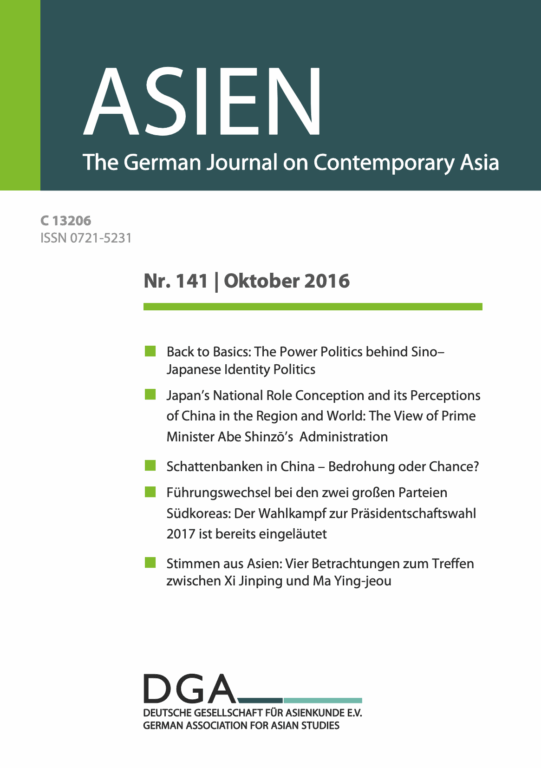
Schattenbanken in China – Bedrohung oder Chance?Jan Schillak
ASIEN – Nr. 141 (2016) pp. 52–67
China’s traditional banking sector is no longer able to meet the financing needs of an increasingly complex domestic economy. In response to these unfulfilled financing needs, the shadow banking system of China has experienced unprecedented growth. The rise to prominence of the shadow banking system has contributed to the liberali- zation of China’s financial system by providing new financing opportunities, thereby compelling the government to relax its previously overly restrictive banking rules. However these contributions to the development of the financial system have come at the expense of financial stability, although most risks created by shadow banks lie within the shadow banking sector and can still be controlled by the government. China’s shadow banks represent an integral but also neutral part of the country’s financial system. The shadow banking system as a whole represents a market inno- vation, one that provides a more efficient and market-based allocation of capital. As such the shadow banking system will continue to play a major role in the further development of the Chinese economy, specifically by acting as an innovation driver for the financial system.
Keywords: China’s financial system, Chinese shadow banks, Chinese banking sector, financials risks, systemic risks, financial crisis, financial innovation, economic development