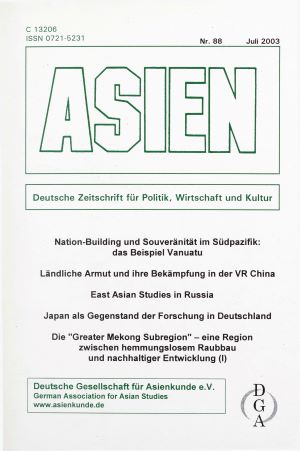
Nation-Building und Souveränität im Südpazifik: das Beispiel VanuatuAndreas Holtz
ASIEN – Nr. 88 (2003) pp. 11–32
The Republic of Vanuatu, which became independent on July 30th, 1980, displays several characteristics that can be regarded as typical for the Melanesian island states of the South Pacific. The Republic belongs to a group of so called „insular microstates“ and is extremely heterogeneous in terms of cultural aspects. It presents the Melanesian contrast between the coastal inhabitants and those living in the interior of the islands. This typical dualism originates from colonial history, when the New Hebrides were governed by an Anglo‐French condominium. First of all, a separation prevailed between the French and British settlers, which was largely due to their being Catholics or Protestants respectively. The differences continued with the governing powers themselves clashing and ultimately resulted in the absurd formation of the condominium. This essay shall try to explain the nation building process of Vanuatu so that as a result, the sovereignty of the state can be understood. In this context, particular consideration shall be given to any similarities between practical ethnology as based on an understanding of actual cultural patterns and the rather more abstract field of political science, which takes a whole‐picture‐approach.