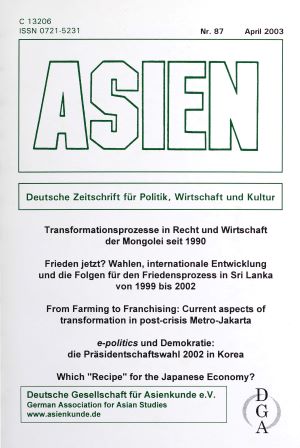
Frieden jetzt? Wahlen, internationale Entwicklung und die Folgen für den Friedensprozess in Sri Lanka von 1999 bis 2002Christian Wagner
ASIEN – Nr. 87 (2003) pp. 30–51
The presidential and parliamentary elections between 1999 and 2002 have changed the political landscape of Sri Lanka considerably. For the first time in the country’s history, the political elites have to cope with a system of cohabitation with the president and the prime minister belonging to different parties. Despite the constitutional and political problems involved this may open new avenues for the peace process because the major Singhalese parties now share political responsibilities for the first time. On the international level, Norway started a peace initiative in 2000. With the memorandum of understanding signed in February 2002 and the installation of the Sri Lanka Monitoring Mission (SLMM), Norway moved from a facilitator to a mediator of the peace process. At the same time there were indications that the LTTE was willing to agree to the proposals because the international pressure on separatist groups and their activities increased in the aftermath of 9-11. These national and international changes opened a window of opportunity of the peace process in the country. It will remain in the responsibility of the political actors to forge an enduring settlement to end the war.